



The loss of the staple fish has bolstered anti-Moscow sentiment, with locals blaming federal authorities for supporting commercial fisheries.
By Evan Gershkovich
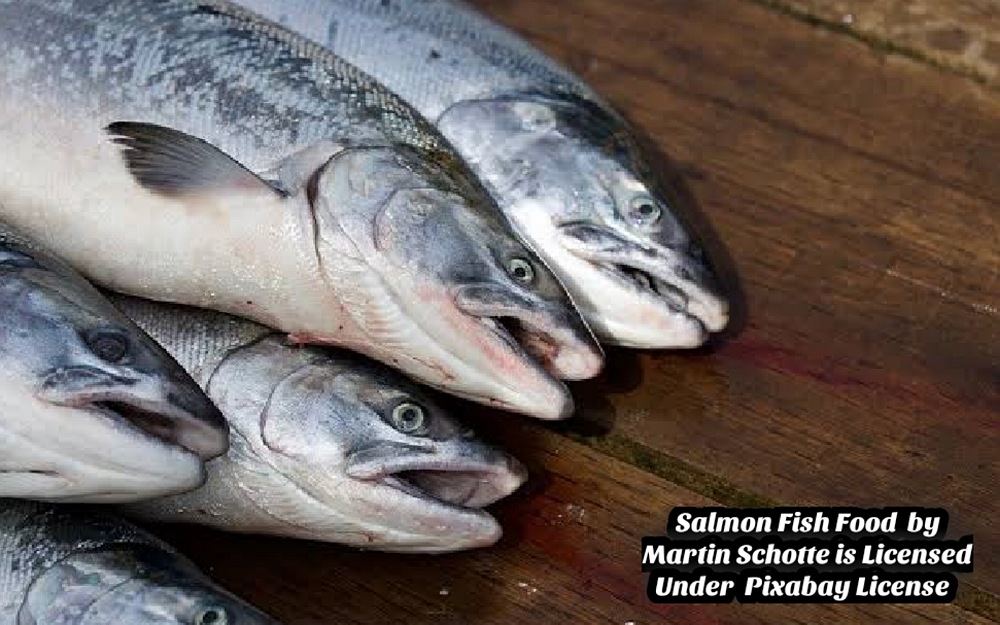
KHABAROVSk: From pink salmon to chum salmon to the glistening orange globes of their roe, Nadezhda Donkan remembers the tables of her childhood always being fully laden in her village in the Far Eastern region of Khabarovsk.
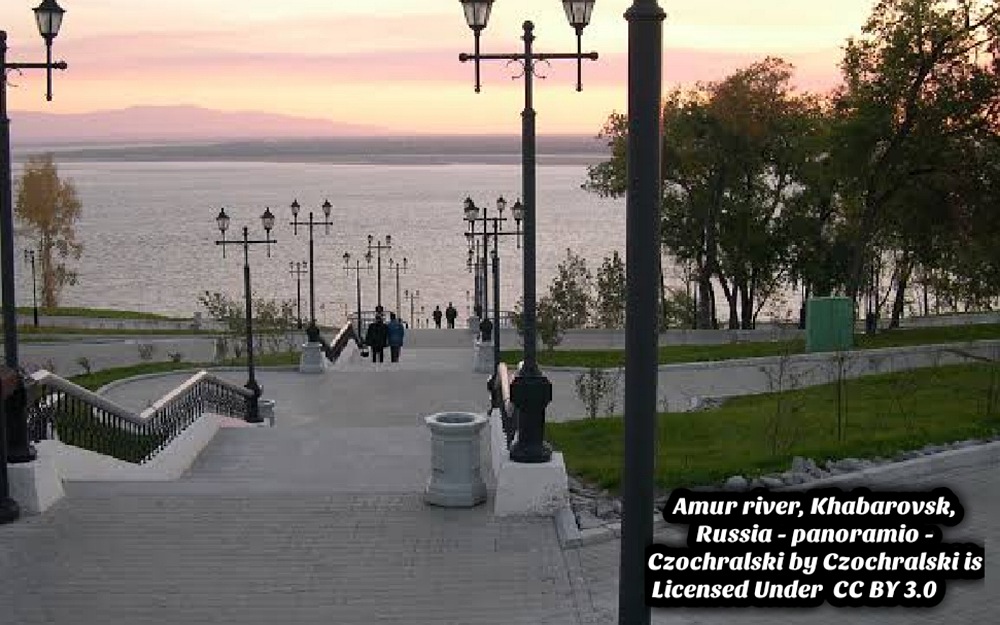
Now a 57-year-old pensioner, Donkan, a member of the indigenous Nanai people whose livelihoods have for centuries depended on the salmon that spawn in the Amur River, recalls the past fondly. That’s because in recent years the staple fish has all but vanished.
“We have to do something about this situation or our great grandchildren won’t see any at all,” Donkan said.
The scarcity of the region’s salmon is a hot topic in Khabarovsk, one that everyone — not only the region’s 22,500 indigenous people — is concerned about. Spend some time in the capital city of Khabarovsk, home to nearly half of the sparsely populated region’s 1.3 million people, and most will tell you they can no longer afford the fish that used to be bountiful.
While salmon poachers have been flourishing in Khabarovsk since the fall of the Soviet Union in 1991, things came to a head in 2017.
“That year barely any fish made it up the river,” said Lyubov Odzyal, who heads the Association of Indigenous Minorities of the Northern Khabarovsk Territory, and has spearheaded efforts to bring government attention to the state of affairs in the three years since. “It was the first signal of this terrible shock.”
The Black Dragon
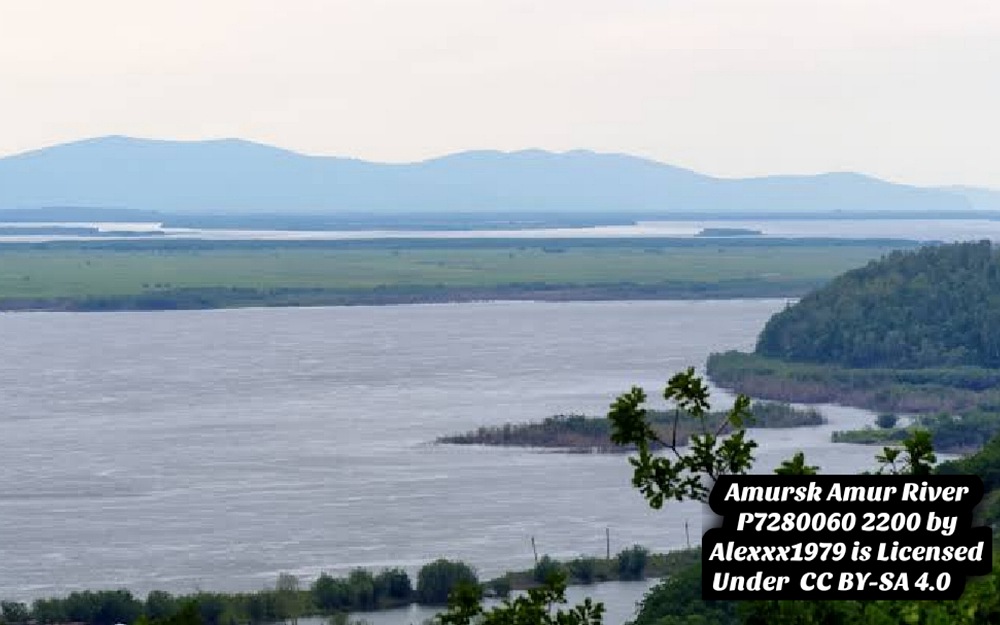
The Amur River, which is also known as the Black Dragon River, is the world’s 10th longest. Emptying into the Strait of Tartary, which separates the seas of Japan and Okhotsk, it covers 4,440 kilometersI’m and forms the border between much of Russia’s Far East and China.
Salmon spawn all along the river before swimming downstream into the nearby seas and the Pacific Ocean, where they spend the next two to four years, depending on the species. Then they return to their original spawning grounds to lay their eggs. That’s when fishermen scoop them up, both for the flesh and the roe.
In an interview in her office in the city of Khabarovsk last week, Odzyal explained the problem as she sees it. Big business, based mostly in Nikolayevsk-on-Amur, the largest town at the mouth of the river, hogs the resources, leaving little to none for the indigenous peoples who live upstream, closer to the city of Khabarovsk to the south.
And as salmon stocks have decreased in recent years due to overfishing, Odzyal believes that the more stringent regulations local and federal authorities have imposed to replenish them have been at the expense of indigenous people, not companies.
“What do they do for the region that they have these privileges?” she said. “The whole of the Amur lives off this fish. Yes, we aren’t wealthy, but we have this. It’s our wealth, we don’t need anything else.”
‘The fairytale’
For their part, business representatives are not shy about admitting that, in the mid-2010s, commercial salmon fisheries in Nikolayevsk-on-Amur proliferated and fished greedily. Some of those companies were supported by a federal program that aimed to boost the Far East’s economy by giving companies tax breaks and other benefits.
“The problem started because a lot more companies began catching the fish and more intensively,” said Alexander Pozdnyakov, president of the Association of Fishery Enterprises of the Amur Basin. “If before companies were concentrated in the first 100 kilometers of the river, they then started expanding 700, 800 kilometers upstream.”
But Pozdnyakov was also quick to point out that, since 2017, stricter restrictions on local fisheries have been put in place as the problem came to light.
Of the changes, the most important, Pozdnyakov said, was that stationary nets or “set-nets” that used to span much of the width of the river, making the salmon easy to catch, have been cut back.
Still, he was not willing to put all of the blame on the companies. The indigenous groups, he said, have also exaggerated their plight. For instance, he claimed, last year there were 30,000 applications for special fishing permits for indigenous people, more than the indigenous population of the entire region, according to the official census, meaning people are abusing the special status afforded to the indigenous populations.
They’ve also come up with this fairytale that we completely block the fish from going upriver and that’s simply not true,” Pozdnyakov said, adding: “This is just an ordinary battle over limited resources.”
Of salmon and men
Beyond the indigenous population, local Russians also are concerned about the fish.
Over the past month, Khabarovsk has been rocked by protests over the arrest of the region’s popular governor Sergei Furgal on several murder charges dating back 15 years his supporters believe are politically motivated.
The rallies have taken on an anti-Moscow bent, with one of the protesters’ main complaints being that their resource-rich region has been plundered for its lumber, gold and fish, to the capital’s benefit. Many stated as fact that their fish is sold cheaper in Moscow than it is in Khabarovsk.
While 90% of the local catch is indeed exported, with most of it going to Asia and the remainder being sold in the rest of Russia, according to Pozdnyakov, Margarita Kryuchkova, chief editor of FishNews.ru, based in the Far Eastern city of Vladivostok, believes the fish issue is not so black and white.
“These are companies that bring jobs to the region,” she said.
After Odzyal raised a fuss over depleted salmon stocks in the local press in 2017, some of those companies shifted the blame from themselves to global warming.
So too did a local specialist with the Moscow-based Russian Federal Research Institute of Fisheries and Oceanography, which forecasts how much fish will return to spawn each season. He claimed that the salmon had left the Amur’s warming waters for Kamchatka, a peninsula on the other side of the Sea of Okhotsk from Khabarovsk to the northeast.
Alexander Zavolokin, a salmon specialist at the North Pacific Fisheries Commission in Tokyo, said that while warming waters have affected stocks in the region in recent years, Russia has actually gained in the short term. Japan, for instance, has seen its stocks plummet, while Russia’s normally colder waters have reached more optimal temperatures for the fish.
But Sergei Korostelyov, coordinator of the sustainable fisheries program of the Kamchatka regional office of the global conservation group World Wildlife Fund (WWF), said that while there is a trend for warming waters to push salmon north, there is little hard data at this point for the Amur. Even Kamchatka itself, he said, has seen a lower catch so far this year, making the argument not so clear cut.
And Alexei Kokorin, head of WWF Russia’s Climate and Energy Program, warned that it has become trendy to shift responsibility from human malpractice to the changing climate.
“Talking about climate change in this case is dumb, it’s just an excuse,” he said. “With the Amur, we just haven’t been getting signals.”
Wolves and hares
The Russian Federal Research Institute of Fisheries and Oceanography did not respond to numerous requests for comment for this article.
One of the group’s Khabarovsk-based specialists, however, did agree to an interview on condition of anonymity.
“This is a natural decline coupled with an excessive fishing load. This always happens,” the specialist said. “As the stock grows, fishermen increase their capacity. As it falls, fishermen are caught by inertia.”
“It’s the law of ‘wolves and hares,’ the law of nature,” the specialist added. “When there is less prey, the predator dies out. When the predator dies out, the prey is restored.”
Lyubov Buvalina, the senior assistant to the Nikolayevsk-on-Amur city prosecutor, spent 15 years up until 2017 trying to stop companies from overfishing and poachers from illegally fishing and roe-stripping — tearing egg sacks out of female salmon before they can spawn. She said her efforts were fruitless.
“By the time you get to the site, they’ve already been warned that you’re coming and are already long gone,” she said. “It’s a massive territory with a small number of people. You need more resources for this work. You need drones.”
Instead, she said, budgets in recent years have faced cuts. While in past years Nikolayevsk-on-Amur had over 40 fish inspectors, that number has now dwindled to four.
And although indigenous groups and business representatives agree that regulations have improved since 2017, WWF’s local office has reported very few fish making it up the Amur and into its tributaries over the past two years.
Mikhail Skopets, a local ichthyologist and the author of “Salmon Fish of the Russian Far East,” said that’s because the life cycle of the salmon is such that it will now take about a decade to restore the previous levels.
For the marine biologist, the warning signs were clear years ago. Back in 2006, when a Canadian journalist visited Khabarovsk for a symposium on fish conservation, Skopets told him that poachers “should be bombed” for the overfishing that was taking place.
“Since then nothing has changed,” Skopets said when asked this week whether he stood by his words. “Only now there is a lot less fish.”
This story was originally published by The Moscow Times Reprinted with the permission of The Moscow Times @Stichting 20 Oktober all rights reserved
UN Permanent Representative of Iran Briefs Press

Malaysian Man Holds Record for Having Most Teeth in His Mouth

Identify the Dog Breed

Fileless Malware

UN Security Council Meets on Energy, Critical Minerals, and Security

Just Before it Collapses, New Jersey Police Rescue Dog from Burning House

Ragdoll Cats

Process Hollowing
Subscribe Our You Tube Channel

Fighting Fake News
Fighting Lies