



The tens of thousands of protesters who have taken to the streets for an eighth straight week aren’t the only crisis roiling Algeria. Helping to drive the unrest in Africa’s largest nation—and posing a serious challenge to any future government— is the economy.
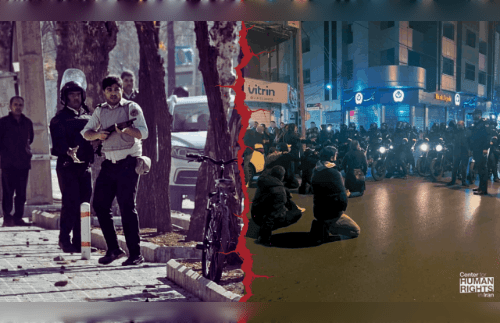
Two months of mass demonstrations continued Friday, as Algerians pushed for a broader overhaul of the country’s system, despite elections set for July 4 by newly appointed interim leader, Abdelkader Bensalah. The protests have been largely peaceful, although there were some clashes reported this time along with scores of arrests, and police used water cannons and teargas in the capital Algiers.
“Bensalah, clear off, FLN clear off,” protesters chanted, referring to Algeria’s ruling party.
But many are also calling for a fundamental reboot of the country’s ailing, energy dependent economy that has failed to diversify and deliver jobs to its majority-young population. The unrest, in turn, is adding to Algeria’s economic headaches, analysts say.
“The economy is not in good shape,” said Paris-based Algerian analyst Alexandre Kateb. “The protests are the last straw, but the economic problems go deeper than that.”
Critics have long accused a power elite surrounding former president Abdelaziz Bouteflika of mismanagement and corruption, arguing a large chunk of the wealth is pocketed by a privileged minority. But for years, Algeria’s oil- and gas-rich economy served as a salve for a restless nation, helping to bankroll housing and other social subsidies.
It may be one explanation, some say—along with the country’s devastating 1990s civil war—why the broader Arab Spring uprising of 2011 failed to take off in Algeria.
Falling oil prices
But plummeting oil prices several years later helped to thin wallets and sharpen grassroots anger. Today, more than one-quarter of people under 25 are unemployed, and many Algerians work in the country’s vast informal sector. Successive governments have failed to privatize and capitalize on promising sectors for development such as tourism and agro-industry.
Earlier this week, the International Monetary Fund downgraded the country’s 2019 forecasted growth to 2.3 percent, from a previous 2.7 percent last October.
“The main motivation is still political,” analyst Kateb said of the protests. “But if the economic situation was better, probably the momentum would be less important. We would not have seen the magnitude of the protests that we see now.”
In the immediate future, Algeria’s economic woes may take a back seat. Besides the popular uprising at home, the current rulers must also keep an eye on regional hotspots, including neighboring Libya.
“From an interim government perspective, it’s just about maintaining stability and avoiding any real crisis beyond where we are at the moment,” said Adel Hamaizia, a North Africa expert for London-based think-tank Chatham House.
“But whoever comes in really has to finally lead an ambitious economic program,” he added, “which helps Algeria realize its potential, develop an independent private sector, diversify, and attract investment on the correct terms.”
Those challenges are daunting. The ruling National Liberation Front or FLN party, in power since independence, has had little incentive to change a status quo that benefited them, many analysts say. Algeria’s business climate has been a turn-off for foreign investors. A case in point: a rule stipulating 51 percent of company shares must be owned by in-country nationals or businesses.
Although energy production continued to chug on during Algeria’s so called “black decade” of violence in the 1990s, further growth stalled. When he came to power in 1999, Bouteflika was credited for ushering in peace. At the beginning, analyst Kateb said, the former president also tried to reform the economy.
“I think he really wanted to give more freedom to entrepreneurs, he really tried to privatize the system,” Kateb said, adding subsequent financial scandals and the global financial crisis ended hope for change.
Inertia and bureaucracy
Kateb, who later served as an economic advisor to ex-prime minister Abelmalek Sellal, said subsequent reform efforts also stalled.
“If you don’t change the whole functioning of the system,” he said, “whatever you do at the margins will be completely absorbed by this inertia and black hole of government bureaucracy.”
If July elections go through as planned, Algerians will be strongly pushing for economic deliverables.
“I’m sure the many of the slogans are going to be centered around anti-corruption, inclusive growth, economic justice, diversification, and job creation,” said Hamaizia of Chatham House.
For the moment, there appear few clear candidates to champion such causes. Both the country’s ruling FLN and traditional opposition parties are largely discredited in the eyes of many Algerians.
Earlier this week, however, the interior ministry announced licenses for 10 new political parties, Reuters news agency reported, citing Algeria’s Ennahar TV channel.
Analyst Kateb believes the country needs a technocratic government to steer through needed changes, at least over the next few years.
He believes there is no lack of talent to staff it, both in Algeria and abroad, where thousands of young professionals have flocked in recent decades for lack of opportunities at home.
“Now they’re not really considered,” Kateb said, “and this has to change.” – VOA