



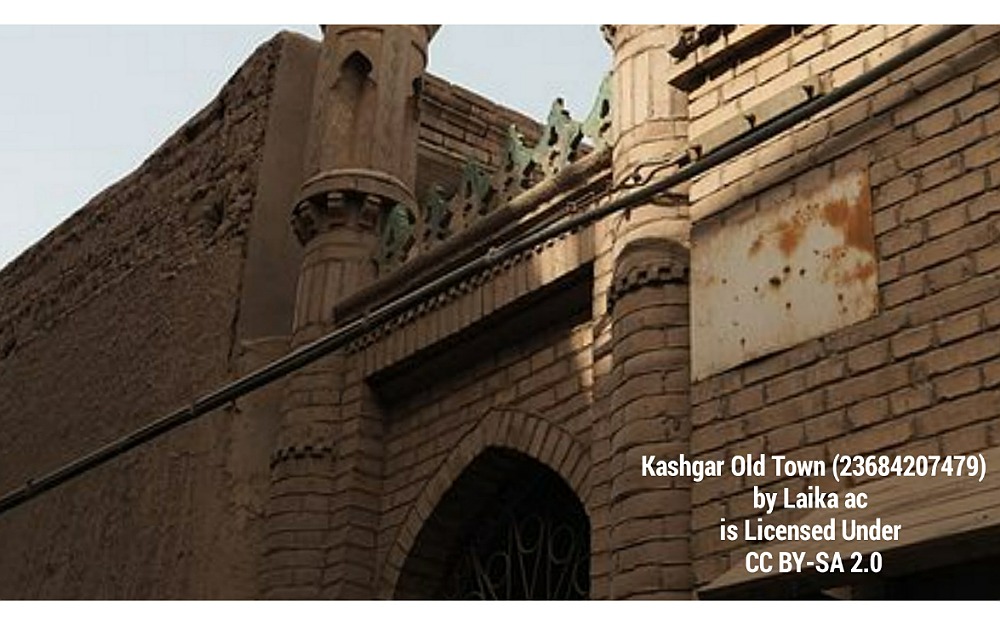
China’s government has destroyed much of Kashgar’s Old City in the Xinjiang Uyghur Autonomous Region (XUAR) precisely because of its cultural significance for Uyghurs, according to a new report, which called the campaign key to understanding how Beijing seeks to control the ethnic group.
In its new report, entitled “Kashgar Coerced: Forced Reconstruction, Exploitation, and Surveillance in the Cradle of Uyghur Culture,” the Washington-based Uyghur Human Rights Project (UHRP) outlines what it calls the Chinese government’s “campaign to stamp out tangible aspects of Uyghur culture,” using the ancient Silk Road trading center as a model.
Kashgar serves as both the “cradle of Uyghur culture” because of its importance as a crossroads between civilizations, but also sits on what UHRP called the “front lines” of one of the world’s most aggressive, high-tech surveillance campaigns, while being targeted for a vast “modernization” effort that the group said seeks to eradicate its historical significance.
The Chinese government announced its intention to raze up to 85 percent of Old City in 2009, the same year in which some 200 people died and 1,700 were injured in a three-day rampage of violence in July in the XUAR capital Urumqi between Uyghurs and Han Chinese, according to China’s official figures. Uyghur rights groups say the numbers are much higher.
In a statement released alongside its report, UHRP executive director Omer Kanat called it “difficult to overstate the importance of Kashgar for the Uyghur people,” who revere the Old City for its unique and centuries old architecture.
“It has been horrifying to watch the city being decimated,” Kanat said. “Even worse, it is a deliberate government policy. Kashgar was the living heart of our culture. It is not something that we can get back.”
While several international organizations, including UNESCO, have voiced their concern at the potential loss of architectural legacy, UHRP said in its report that “it is precisely because of Kashgar’s uniqueness and its profound degree of cultural significance for Uyghurs that the Chinese government has gone to extraordinary lengths to co-opt the city’s symbolic heritage.”
“Kashgar’s reconstruction, exploitation, and surveillance have been mutually reinforcing, producing a new breed of totalitarian ‘smart city’ optimized for ethnic repression,” it said.
Destroying cultural touchstones
Kashgar’s Old City offers one of the clearest examples of Beijing’s efforts to reshape the Uyghur cultural narrative, but it is by no means the only one. RFA’s Uyghur Service has documented countless cases of official efforts to wipe away the historical and social touchstones of Uyghur civilization and replace them with symbols of loyalty to the ruling Chinese Communist Party (CCP).
One such report detailed a “rectification” campaign that kicked off in 2017 and led to the destruction of thousands of mosques by authorities citing dilapidated structures that posed a safety threat to the pious, but that Uyghur sources said was part of a bid to standardize and regulate the houses of worship. Though no official count has been given for the number demolished, RFA was able to determine that at least 5,000 were torn down over a period of just three months.
RFA has also reported on the destruction of Uyghur cemeteries throughout the region by officials claiming that they were disorderly or had encroached on government land. Historian Rian Thum believes such measures are aimed at controlling the wider Uyghur population, which views the sites as “a part of the historical landscape of the Uyghur region,” regardless of their religious significance.
An investigation by Agence France-Presse in October revealed that at least 45 cemeteries in the XUAR had been destroyed since 2014—30 of which were razed since 2017.
But the targeting of Uyghur cultural traditions goes far beyond the destruction of their physical manifestations. Heavy restrictions on religious practices, the teaching of the Uyghur language in schools, and even appearance and diet, are in place throughout the region under the guise of “modernization.”
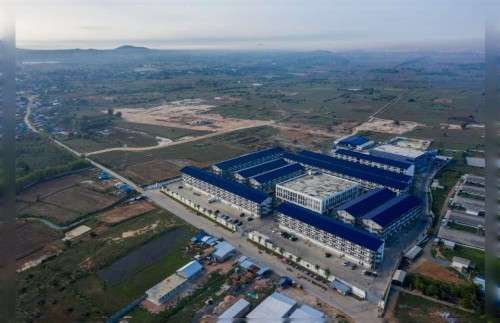
Those who violate these rules are arbitrarily detained in the XUAR’s vast network of some 1,300 internment camps, where authorities are believed to have held up to 1.8 million Uyghurs and other Muslim minorities accused of harboring “strong religious views” and “politically incorrect” ideas since April 2017.
While Beijing initially denied the existence of the camps, China last year changed tack and began describing the facilities as “boarding schools” that provide vocational training for Uyghurs, discourage radicalization, and help protect the country from terrorism.
But reporting by RFA and other media outlets indicate that those in the camps are detained against their will and subjected to political indoctrination, routinely face rough treatment at the hands of their overseers and endure poor diets and unhygienic conditions in the often-overcrowded facilities.
Evidence also shows that as the Western world has increasingly called for Beijing to shut down the camps system, authorities have since 2019 shifted many detainees into forced labor at factories tied to the facilities as part of a bid to support the government narrative that they have “graduated” from vocational school.
UNESCO site list
UHRP said in its report that the use of mass internment camps and forced labor add to longer histories of forced reconstruction, economic exploitation, and surveillance that have been reshaping Kashgar since the early 2000s.
“Through such an unprecedented urban experiment conducted in the heart of Uyghur culture, the Chinese government has been able to impose its own coerced version of Uyghur society in the service of cultural genocide,” it said.
“In this sense, Kashgar can act as a prism through which to better understand current forms of Chinese government control over the Uyghur population and its unprecedented campaign of forced assimilation.”
In its recommendations, URHP called on the Chinese government to end the demolition of all Uyghur cultural sites; cease the destruction of mosques, graveyards, and other sites; and meaningfully engage the Uyghur community in plans for development.
It also urged Beijing to add Kashgar’s Old City to UNESCO’s Tentative List for consideration as a World Heritage Site and to shut down surveillance measures in the region.
UHRP also called on the United Nations to engage with the Chinese government on the status of the Old City, and for governments to raise private and public concern for continued destruction of cultural sites across the XUAR.
Additionally, the group requested that governments impose targeted sanctions, such as the U.S. Global Magnitsky Act, on senior officials responsible for abuses in the region, as well as export controls to deny the Chinese government and companies enabling government abuses access to technologies used to violate basic rights.
Copyright © 1998-2020, RFA. Used with the permission of Radio Free Asia, 2025 M St. NW, Suite 300, Washington DC 20036. https://www.rfa.org
UN Permanent Representative of Iran Briefs Press

Malaysian Man Holds Record for Having Most Teeth in His Mouth

Identify the Dog Breed

Fileless Malware
UN Security Council Meets on Energy, Critical Minerals, and Security

Just Before it Collapses, New Jersey Police Rescue Dog from Burning House

Ragdoll Cats

Process Hollowing
Subscribe Our You Tube Channel

Fighting Fake News
Fighting Lies