



BenarNews staff/Washington
Zulkarnain Saer Khan, a Bangladeshi journalist living in exile in London, recalled the scary text message he received from an unknown number in March.
“Sami Bhai, check on your younger brother, Mahi. I’ve heard they got his arms and legs broken,” the message from the stranger said.
A startled Khan immediately dialed the WhatsApp number for his brother, Mahinur Khan, whose wife picked up the call.
She burst into tears as she reluctantly confirmed that four unidentified men had assaulted her husband. As they beat Mahinur with iron rods, they allegedly berated his brother, Zulkarnain, for writing articles that criticized the government.
“My brother and his wife kept the incident secret from me for five days because they feared I would go public, and more troubles would befall them as a result,” Zulkarnain Khan, who is also known as Sami, told BenarNews.
“Mahi was bedridden for two months.”
Khan believes the perpetrators were cadres for the Awami League, Bangladesh’s ruling party. He suspects the assault was carried out because of his widely publicized story a few months earlier about corruption allegations that implicated a Bangladeshi politician close to Prime Minister Sheikh Hasina.
Freedom House, a Washington-based NGO, said the harassment and persecution back home of family members of exiled government critics and journalists is a widespread tactic in transnational repression carried out by authoritarian governments across the globe.
“In the case of Bangladesh, a lot of the targeting of journalists involves this coercion by proxy, which is the targeting of family members and friends back home,” Grady Vaughan, a researcher at Freedom House, told BenarNews.
On Dec. 6, Freedom House published a report detailing how authoritarian governments are escalating transnational repression to muzzle journalists. The report documented 112 acts of physical violence against exiled journalists by 26 governments.
The list does not include Bangladesh, but “coercion by proxy” tends to have a similar chilling effect on the targeted journalists, Vaughan said.
“The goal of this type of coercion by proxy and targeting a family member is to intimidate and harass those closest to the targeted individual,” he said. “That often has a psychological effect on the targeted individual in exile.”
Bangladesh government officials did not respond to emailed requests from BenarNews seeking comment for questions about alleged transnational repression, targeting by proxy the relatives of exiled journalists and other critics.
In previously issued public statements, government officials often have accused these journalists and commentators who are living abroad of running “anti-state propaganda.”
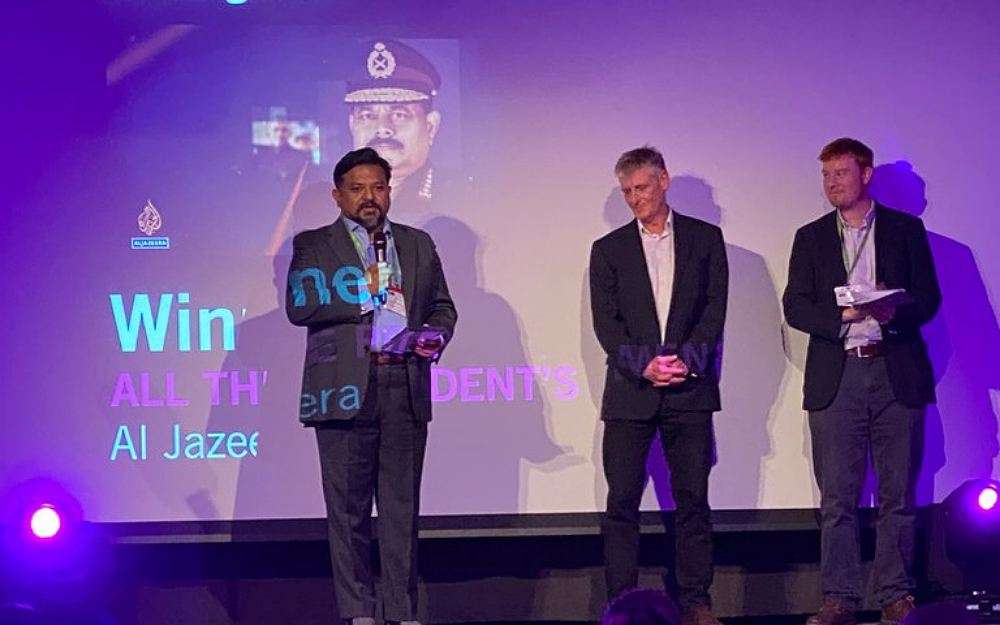
In the case of Khan, an earlier statement issued by the military branded him as a “greedy and fraudulent” “swindler” after he appeared as a whistleblower on an Al Jazeera news documentary in 2021 alleging corruption against Bangladesh’s then-army chief.
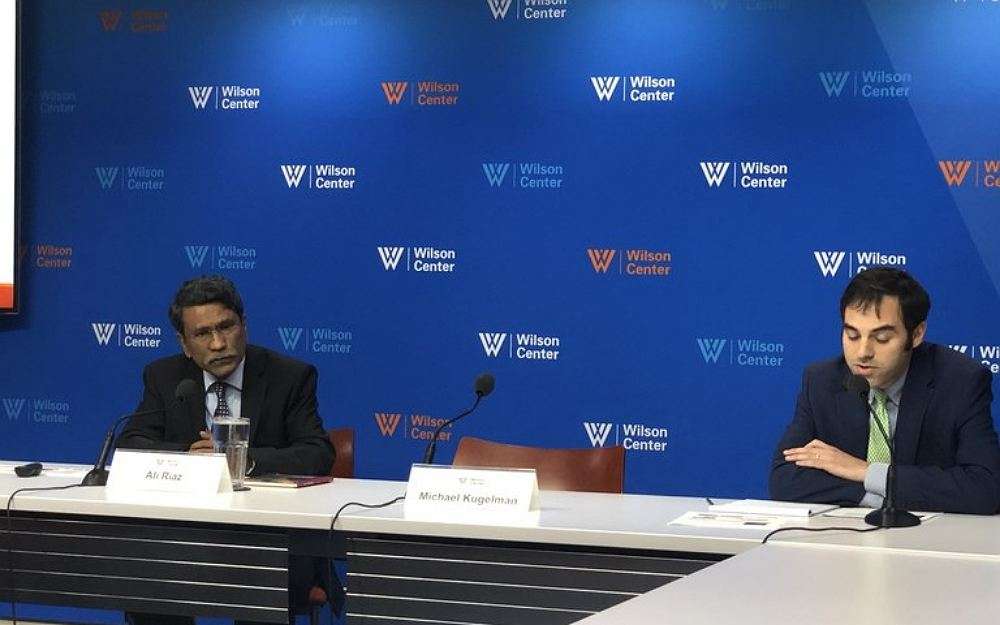
Ali Riaz, a prominent Bangladesh commentator and professor of political science at Illinois State University in the United States, said he began noticing the trend after Bangladesh conducted what he called “a farcical election in 2018.”
The Awami League party, which has been in power since 2009, won more than 95% of parliamentary seats in the 2018 general election amid widespread reports of fraud and intimidation.
“After the 2018 election, even the Awami League government realized that its legitimacy was questionable, especially internationally. Then emerged a trend of targeting critics living abroad,” he said.
‘By proxy’
Numerous journalists and commentators in the Bangladeshi diaspora, using social media platforms and alternative media, have grown increasingly critical of Prime Minister Sheikh Hasina’s government in recent years.
And the repercussions have followed.
An early example unfolded in April 2020 when law enforcement officers visited the mother of Tasneem Khalil, a Sweden-based journalist who had launched Netra News, an organization focusing on Bangladesh, six months earlier.
“My mother has repeatedly encountered visits from law enforcement and intelligence agencies since then,” he told BenarNews.
In October 2021, Bangladesh authorities arrested Nusrat Shahrin Raka along with her three minor children. She is the sister of Kanak Sarwar, a U.S.-based journalist who often hosts high-profile dissenting figures on his YouTube channel.
In a press release cited by media sources, the Rapid Action Battalion, an elite police unit, accused Raka of being an “active member of an anti-state propaganda and conspiracy circle” along with her “treasonous” brother.
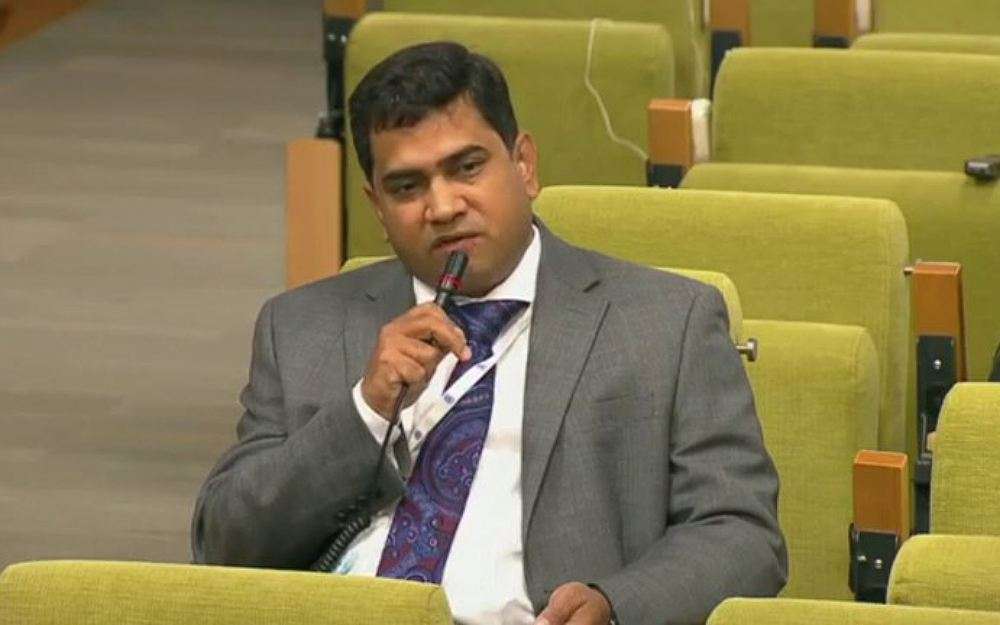
According to Mushfiqul Fazal Ansarey, a Bangladeshi journalist who frequently raises questions about Bangladesh at daily press briefings at the U.S. State Department and the United Nations, journalists are targeted merely for doing their work.
“About a year ago, a press release from the Bangladesh Embassy cited Congressman Gregory Meeks as saying that the U.S. government would not impose sanctions against Bangladesh anymore,” he said.
When Ansarey sought clarification on this, the U.S. House Foreign Affairs Committee, which Meeks chaired at the time, issued a statement contradicting the embassy’s press release, the journalist recalled.
“We did not ask Meeks to change his stance. We simply tried to fact-check a government press release. And that very act landed us in trouble,” said Ansarey, who served on the press team of Khaleda Zia, the former prime minister from the opposition Bangladesh Nationalist Party who is living at home under legal restrictions.
He alleged that local ruling party activists retaliated by vandalizing his family home in northeastern Bangladesh’s Sylhet region and that law enforcement officials routinely question his family members, including his elderly mother.
“My father had to move to the U.K. permanently because of the harassment, and my parents have not seen each other for seven years,” he said.
“The police visited my brother-in-law at his workplace in a local bank, treating him as if he were a criminal. Even my distant cousin, who shares my surname, was interrogated by local police and law enforcement.”
In September 2022, police officers in Moulvibazar, a northeastern district, arrested the brother of Abdur Rab Bhutto, a commentator based in the United Kingdom, for his Facebook “propaganda against Prime Minister Hasina,” a local newspaper reported.
There have been other instances when critics were targeted more directly through a different proxy.
In 2019, Riaz, the U.S.-based academic, said book events in Germany and Washington were disrupted by members of the Awami League’s foreign units.
“At one point, they tried to encircle me aggressively, and I felt physically intimidated. Until then, I was never concerned about my physical safety abroad,” he said.
‘Digital threats’
Bangladeshi dissidents say they also face a subtler form of repression: digital smearing campaigns.
Few have encountered more such campaigns than Zulkarnain Saer Khan, who earlier collaborated with the Israeli newspaper Haaretz to expose the Bangladesh government’s purchase of highly sophisticated spyware from Israel.
But he is best known for his appearance on “All the Prime Minister’s Men,” the explosive 2021 Al Jazeera news documentary that exposed allegations of corruption tied to Bangladesh’s then-military chief.
On Facebook, numerous accounts routinely use a Bengali slur to label Khan as “homosexual,” among other derogatory terms and have published fake photos of him as a criminal and drug addict. X, formerly known as Twitter, formally notified him on multiple occasions that Bangladesh authorities had asked to take down his posts for allegedly violating local laws.
Some Bangladeshi websites accused him of being a Muslim terrorist, of planning a deadly bombing in Hungary (his former residence), and even of financing Hamas – all without any evidence, according to the Committee to Protect Journalists, a New York-based press advocacy group.
“Bangladesh has built a reputation for targeting exiled journalists through transnational repression. There are a growing number of cases, from digital threats to intimidation of families. It is extremely concerning, while the perpetrators get away scot-free,” Beh Lih Yi, who heads the CPJ’s Asia Division, told BenarNews.
“Journalists have had to flee because their safety came under serious threat in their home countries – they should not continue to live in fear even when they are in exile.”
Other journalists and critics are also frequently accused of being “terrorists” or “jihadists.”
Although many targeted journalists and academics have carried on with their work despite the risks, others find the stakes are too high.
A legal associate based in New York, who requested anonymity because of fear of reprisals, abandoned his role as a correspondent for a Bangladesh-based newspaper after his report challenged the government’s claims about a U.N. award for Hasina.
“My Bangladeshi passport filed for renewal was never returned to me. As a result, I couldn’t travel abroad or back home for seven years,” he said.
“Three of my brothers are still government employees. I just did not want their livelihoods destroyed because of my work.”
Copyright ©2015-2022, BenarNews. Used with the permission of BenarNews.