



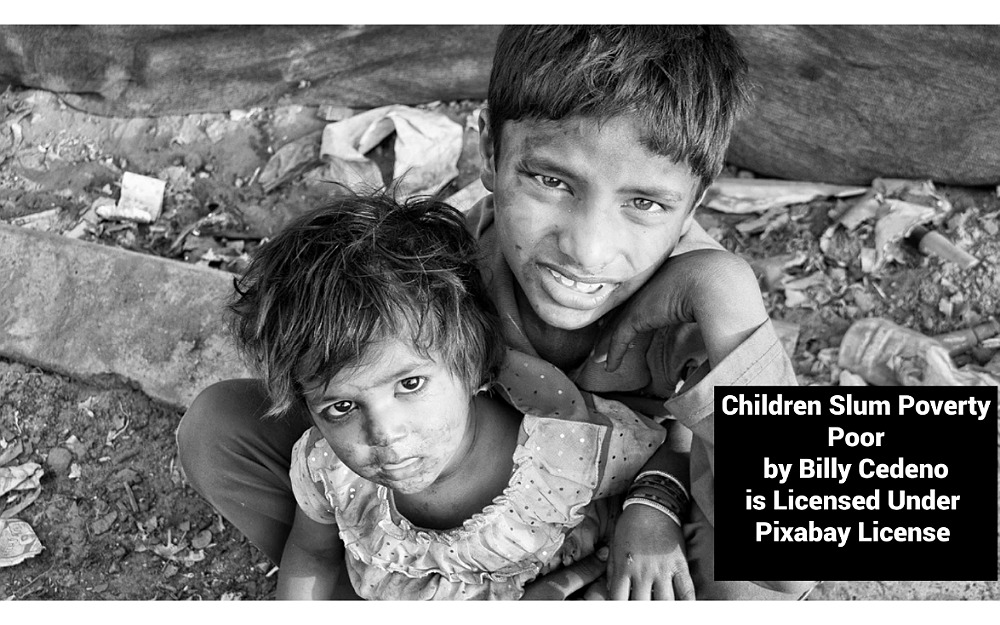
The forecasts make for dismal reading. The coronavirus has wreaked havoc across the globe but one of the most alarming consequences of the potentially deadly pathogen will be a likely dramatic increase in poverty.
According to major charities, banks and international agencies,as many as 420 million more people will slip into poverty this year — and as many as 60 million of them could be propelled into extreme poverty, defined as living on less than $1.90 per day.
The pandemic risks reversing all the gains made in the past decade to reduce global poverty—a step back that willseemore children dying of preventable diseases,ortheir educationscurtailedand their life prospects stunted. Global poverty will actually increase for the first time, for a very, very long time,”saidHomiKharas, a vicepresident at the Brookings Institution, a Washington,D.C.-basedresearch group.
The pandemic risks reversing all the gains made in the past decade to reduce global poverty—a step back that willseemore children dying of preventable diseases,ortheir educationscurtailedand their life prospects stunted. Global poverty will actually increase for the first time, for a very, very long time,”saidHomiKharas, a vicepresident at the Brookings Institution, a Washington,D.C.-basedresearch group.
Kharasis aformer World Bank staffer and lead author of an ambitious, groundbreaking 2013 report for the U.N.secretary-general on how to eradicatepoverty through sustainabledevelopment. Hetold VOA the damage won’t just be“a temporary phenomenon,”butone with“long-lasting consequences.”It isn’t,Kharassaid, just an issue of immediate hunger. He saysthere will be a devastating impact“on the opportunities that children and families have going forward.”
Since 1990,one-quarter of theworld’s population has risenout of extreme poverty, partlydueto globalization,increased trade and economic activity, say analysts.Before the pandemic struck,lessthan 10 percentof the world’s populationwereenduringextremepoverty. Thenumber of children dying from the preventable causes ofhungerand disease every dayhadreducedfrom35,000 to 15,000. The pandemic will likely doom any chance that extreme poverty will be eradicated by 2030, a U.N.goal.
The charity Save the Children and UNICEF, the U.N.agency responsible for overseeing humanitarian and developmental aid to children worldwide, has warned that without urgent action, the number of children living in poor households across low-and middle-income countries could increase by 15%, to reach 672 million, a jump of 86 million. Nearly two-thirds of these children live in sub-Saharan Africa and South Asia. But countries across Europe and Central Asia could also see the most significant increase, up to 44 % across the region. Latin America and the Caribbean could witness a22% jump.
“The coronavirus pandemic has triggered an unprecedented socioeconomic crisis that is draining resources for families all over the world,”said Henrietta Fore, UNICEF executive director.“The scale anddepth of financial hardship among families threatens to roll back years of progress in reducing child poverty and to leave children deprived of essential services. Without concerted action, families barely getting by could be pushed into poverty, and the poorest families could face levels of deprivation that have not been seen for decades,”she added in a statement last week.
“The shocking poverty impacts of the COVID-19 pandemic will hit children hard,”saysIngerAshing, the CEO of Save theChildren International.“Children are highly vulnerable to even short periods of hunger and malnutrition — potentially affecting them for their whole life. If we act now and decisively, we can prevent and contain the pandemic threat facing the poorest countries and some of the most vulnerable children,”she added.COVID-19 is the disease caused by the coronavirus.
The World Bank aims to help vulnerable communities by providing grants and loans to both individuals and businesses, as well as suspending debt payments for some of the world’s poorest countries. Overall, it has pledged at least $160 billion to combat the virus so far.
The normal“coping mechanisms”the poor have fallen back on traditionally to lessen the impact of a shock, like a poor harvest, drought or other catastrophic weather event, are now fraying. With the economic consequences of the global pandemic hitting everyone at once, friends or families can’t provide rollover help. There is not extra work to be had; the poor generally don’t have jobs they can do remotely, working from home.
Even relatives overseas are being affected, meaning they can’t provide temporary handouts in the form of remittances, money sent back home, to stave off destitution. The World Bank estimates that global remittances from migrant workers could drop by 20%, about $100 billion, this year.
The U.N.World Food Program predicts that acute hunger will double. The agency’s executive director, David Beasley, last month warned the Security Council that the pandemic issparking“the worst humanitariancrisis since World War Two.”He is especially concerned about countries that are already mired in conflict or are suffering impact from climate change. He warned of famines of“biblical proportions.”
The signs of distress are already obvious. They were on vivid display in India in March when millions of migrant laborers fled lockeddown cities and trudged back hundreds ofkilometers to their villages in a human displacement normally only seen in wartime. The Brookings vice president,Kharas,says he worries about India a little less than parts of Africa. The World Bank predicts that African government revenues will plunge from 12-to 16% this year.
“I’m less concerned about Indiabecause it has a reasonably well-functioning government,”he said.“They’ve got a social safety net. And the government has announced quite a significant program to distribute funds to people who are being hit hard.”He said thanks to digital accounts,the Delhi government can transfer money directlythroughmobile phones. India, like countries in South Asia, have broader tax bases, too, and“have the channels and the instruments to be able to alleviate some of poverty, whereas in many African countries, to be honest, they don’t.”
The focus of his anxiety currently is east Africa, partsof which are also trying to cope with a locust plague. A collapse in tourism and a massive reduction in tradeareupending public finances, which arealso much more dependent on commodity prices, he said.
Poor countries will need help from the rich.Will that happen?“There are plenty of calls for debt relief, for a new issuance of special drawing rights from the International Monetary Fund,”he said. And this stage,Kharassaid,“It is difficult to be preciseabout the needs as the spread of thevirus in developing countries has come later and there is still a lot that’s not known about the overall public health and economic impact of the virus in developing countries,”he added.
So far,the IMF and World Bank have lent $26 billion in all to poorercountries to cope withtheimpact of the virus. Some analysts worry that talks about debt relief are moving too slowly.LarissaPelhamandNigelTimminsof Oxfam, a British charity, said the“current crisis calls for a response on an unprecedented scale.”Theyadded that $2.5trillion in debt relief and special drawing rights will be needed to support developing economies to withstand the impacts of coronavirus.
Will the richer countries step up, especially when they’re struggling with theirpublic financesand pouring cash in to shore up theirflagging economies?
Kharasdraws some comfort from the fact that the advanced countries have found money to subsidize theireconomies, revealing what is possible. And by stepping up,“We will make everyone, including ourselves, better off.Soit’s not that we’re losing. We do get a returnand in some cases, a very handsome return, both in terms of increased economic activity, which benefits us,and a reduction in war and violence.”-VOA
UN Permanent Representative of Iran Briefs Press

Malaysian Man Holds Record for Having Most Teeth in His Mouth

Identify the Dog Breed

Fileless Malware
UN Security Council Meets on Energy, Critical Minerals, and Security

Just Before it Collapses, New Jersey Police Rescue Dog from Burning House

Ragdoll Cats

Process Hollowing
Subscribe Our You Tube Channel

Fighting Fake News
Fighting Lies