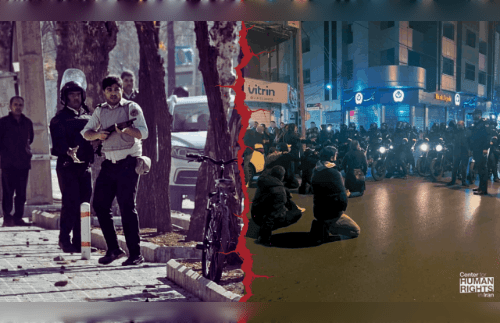




Survivor of the Chinese Gulag’ describes Gulbahar Haitiwaji’s ordeal during a trip to Xinjiang from her home in France

France-based Uyghur woman’s trip back to Xinjiang to sign retirement papers in late 2016 turned into a 32-month ordeal of cold-iron shackles, interrogation and brainwashing sessions in one of the northwestern Chinese region’s notorious internment camps, detained by communist authorities as an alleged terrorist.
In her new book Rescapée du Goulag Chinois (Survivor of the Chinese Gulag), Gulbahar Haitiwajidetails her experience from her extralegal incarceration, wretched food, and brutal living conditions from her disappearance in January 2017 to her release and return to France in August 2019.
Haitiwaji disappeared in January 2017, around the time authorities began to detain what is believed to be 1.8 million Uyghurs and other Muslim minorities accused of “religious extremism” in a vast network of internment camps in the Xinjiang Uyghur Autonomous Region (XUAR).
Born in Ghulja (Yining)—the seat of Ili Kazakh (Yili Hasake) Autonomous Prefecture and the XUAR’s third largest city—in 1966, Haitiwaji relocated to France in 2006, joining her husband who had moved there four years earlier. While her husband and two daughters took French citizenship, Haitiwaji decided to keep her Chinese nationality so that she could return home to see family members and is living in France on renewable 10-year residency permits.
In November 2016, she returned to the XUAR for a two-week trip upon the request of her former work unit to sign papers related to her retirement.
However, she said that once she returned home, authorities confiscated her passport and on Jan. 29, 2017 locked her in a detention center.
“They locked me up in the detention center on accusations of having committed the crime of organizing people and disturbing the social order, but I’ve never done such a thing,” she told RFA’s Uyghur Service.
“Later they showed me a photo of one of my daughters with the [East Turkestan] flag wrapped around her at a protest [against repression in the XUAR] and told me my daughter was a terrorist,” she added, using the name preferred by Uyghurs for their homeland.
“They detained me on accusations that my husband had gone to France and sought political asylum, that he’d taken part in [political] organizations, that I was the wife of a terrorist, the mother of a terrorist.”
Life in internment
At some point, Haitiwaji was brought to an internment camp, which Chinese officials have described as centers for “vocational training,” despite reporting by RFA and other media outlets which shows that detainees are mostly held against their will in cramped and unsanitary conditions, where they are forced to endure inhumane treatment and political indoctrination.
Haitiwaji spoke about the conditions and treatment in the camp, in the XUAR’s prefectural-level city of Karamay (in Chinese, Kelemayi) including the ways she was interrogated, the brainwashing sessions, prohibited from using the Uyghur language, and the presence of cameras throughout the facility.
“Our clothing was very thin and we had shackles on our ankles—it was so cold. The lights were on 24/7 in both the detention camps and the cells … Our food was also horrible,” she said.
“Physically speaking, my knees and back started to ache. My ability to remember things deteriorated, too. I suffered through it and, though there were shackles on my feet, would walk back and forth. I would stretch my muscles. I’ve always loved swimming and exercise, so I didn’t stay still. Even when they chained me to a bed for 20 days, I would stand up and run in place, stretch my muscles out.”
While in the camp, Haitiwaji said she received shots from the camp staff on two separate occasions, a detail in line with accounts given by other survivors, who have in some cases described more frequent and regular series of shots or blood withdrawals. The authorities told her and her cellmates that the shots were to prevent the flu, but following the treatment, many of the younger women detained there stopped menstruating, she said.
Eventually, Haitiwaji was found “innocent” of the charges against her and on Aug. 21, 2019, she was able to return to France.
Documenting her experience
Upon her arrival, Haitiwaji spent a period focusing on her physical and mental health. She told RFA that she has given anonymous testimony about her ordeal to French government agencies as well as to human rights organizations in Europe and throughout the world.
Ultimately, she decided that writing a book about her experiences in the camp would be the best way for her to go public with her story and she began the work in early 2020. Her book is co-authored by French journalist Rozenn Morgat and was published in French on Jan. 13.
“Difficult days have befallen us. We can’t cry and complain and sit around allowing ourselves to be defeated just because these days have befallen us. That’s of no use; ultimately, we would be the ones to suffer from it,” she said.
“Physically speaking, my knees and back started to ache. My ability to remember things deteriorated, too. I suffered through it and, though there were shackles on my feet, would walk back and forth. I would stretch my muscles. I’ve always loved swimming and exercise, so I didn’t stay still. Even when they chained me to a bed for 20 days, I would stand up and run in place, stretch my muscles out.”
While in the camp, Haitiwaji said she received shots from the camp staff on two separate occasions, a detail in line with accounts given by other survivors, who have in some cases described more frequent and regular series of shots or blood withdrawals. The authorities told her and her cellmates that the shots were to prevent the flu, but following the treatment, many of the younger women detained there stopped menstruating, she said.
Eventually, Haitiwaji was found “innocent” of the charges against her and on Aug. 21, 2019, she was able to return to France.
Documenting her experience
Upon her arrival, Haitiwaji spent a period focusing on her physical and mental health. She told RFA that she has given anonymous testimony about her ordeal to French government agencies as well as to human rights organizations in Europe and throughout the world.
Ultimately, she decided that writing a book about her experiences in the camp would be the best way for her to go public with her story and she began the work in early 2020. Her book is co-authored by French journalist Rozenn Morgat and was published in French on Jan. 13.
“Difficult days have befallen us. We can’t cry and complain and sit around allowing ourselves to be defeated just because these days have befallen us. That’s of no use; ultimately, we would be the ones to suffer from it,” she said.
“I have no choice but to accept the difficult days I’ve seen, the reality [of what happened to me].”
Haitiwaji said she believes that the real intent of China’s camps is to eliminate the Uyghurs, and to carry out a cultural genocide against them.
“In writing this book, I want to tell people about what happened in the camp in Karamay, about the difficult days that came upon me,” she said.
“Ultimately, with my book … my hope is that the Chinese government will let up on the pressure it’s putting on Uyghurs, that it will close the camps. That this book will have an impact and that people around the world will care even more once they hear [my story].”
Nury Turkel, a commissioner on the U.S. Commission on International Religious Freedom (USCIRF), an independent U.S. federal government body, recently said in a tweet that Haitiwaji’s experience “reveals the reality of #China’s genocidal policies for #Uyghurs in#Xinjiang.”
“The world must stand together against these atrocities,” he added.
Reported by Gulchehra Hoja for RFA’s Uyghur Service. Translated by the Uyghur Service. Written in English by Joshua Lipes.
Copyright © 1998-2020, RFA. Used with the permission of Radio Free Asia, 2025 M St. NW, Suite 300, Washington DC 20036. https://www.rfa.org
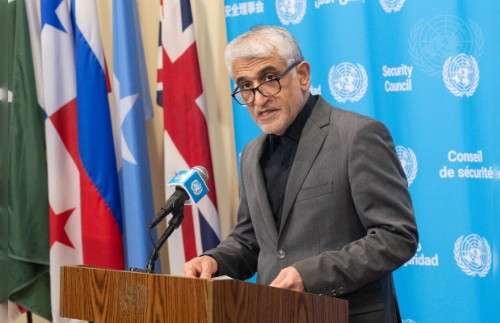
UN Permanent Representative of Iran Briefs Press
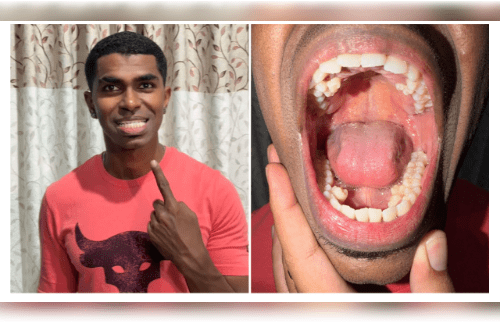
Malaysian Man Holds Record for Having Most Teeth in His Mouth

Identify the Dog Breed

Fileless Malware

UN Security Council Meets on Energy, Critical Minerals, and Security

Just Before it Collapses, New Jersey Police Rescue Dog from Burning House

Ragdoll Cats

Process Hollowing
Subscribe Our You Tube Channel

Fighting Fake News
Fighting Lies