



A commentary by Ali Riaz
Bangladesh’s Election Commission set the country on a familiar but gravely uncertain path last week when it announced Jan. 7 as the date for the 12th parliamentary elections.
The ruling Awami League is trying to consolidate its grip on power in the run-up to the general election by using state power to suppress the opposition, which faces challenges in uniting and mobilizing under this repression.
As of now, it’s unclear whether Prime Minister Sheikh Hasina and her party can steer through the polls as they did in the two previous elections or whether the opposition can prevent them from holding a unilateral exercise.
The announcement of the poll schedule on Nov. 15 elicited a feeling of déjà vu, which was reminiscent of the 2014 general election that opposition parties boycotted.
That year’s polls, which independent observers described as seriously flawed, saw more than half of the seats go uncontested, resulting in a de facto one-party Parliament.
It was fundamentally not so different in 2018 when the opposition participated in the polls. The Election Commission connived with law enforcement agencies and civilian bureaucrats to engineer an election that delivered a resounding victory for the Awami League, which secured more than 95% of the parliamentary seats.
The state apparatuses were also used to persecute the opposition in the months leading up to those polls and then to stuff ballots the night before Election Day. That resulted in legitimate voters being turned away from polling centers because others had cast ballots in their place.
The 2014 and 2018 elections not only created a legislative body subservient to the executive branch led by Hasina, but they also provided her with unbridled control over the state apparatuses – from law enforcement and the judiciary to the Election Commission.
But those elections did not happen in a vacuum.
Bangladesh’s propitious journey towards democracy, which began in 1991, suffered a jolt in 2007 when the military orchestrated a soft coup and ruled the country for about two years.
In 2011, the ruling Awami League used its supermajority in Parliament – which it had secured in a fair election held three years earlier – to remove the provision of holding national elections under a non-partisan entity called the Caretaker Government.
Thus began the country’s reverse course, resulting in today’s electoral autocracy. Ironically, the caretaker provision had been inserted into the 1996 Constitution because of the then-opposition Awami League’s relentless agitation in the streets.
Bangladesh’s tumultuous history showed that, starting with its first election in 1973, no election under the incumbent government had been free or fair. The caretaker system proved to be the only guardrail – an effective vertical accountability mechanism – against wholesale rigging of the election process.
In 2014, the Bangladesh Nationalist Party and the opposition parties threatened to boycott the election unless the system was restored, and the party made good on its threats. However, the Awami League went ahead with the elections and fulfilled its five-year term, although the parliament lacked legitimacy.
Then, with the engineered victory in 2018, Hasina became the longest-serving head of the government in Bangladesh. Ahead of that election, her archrival, Khaleda Zia, who had held the record until then of being elected three times, was sentenced to 10 years in prison on dubious charges that smacked of political vengeance.
And throughout Hasina’s successive rules, extrajudicial killings and enforced disappearances shot up, the independence of the media was severely curtailed, and critical voices were muzzled through legal and extra-legal measures.
Civil society was deliberately decimated. Opposition parties were denied the right to assembly and charged with frivolous cases. The local media often refer to these as “ghost cases” because they describe alleged crimes that could not have been committed by the accused because they were either dead, sick or living abroad.
All of these led to solidifying a culture of fear.
State of play
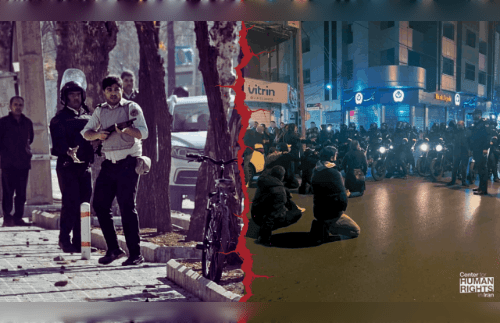
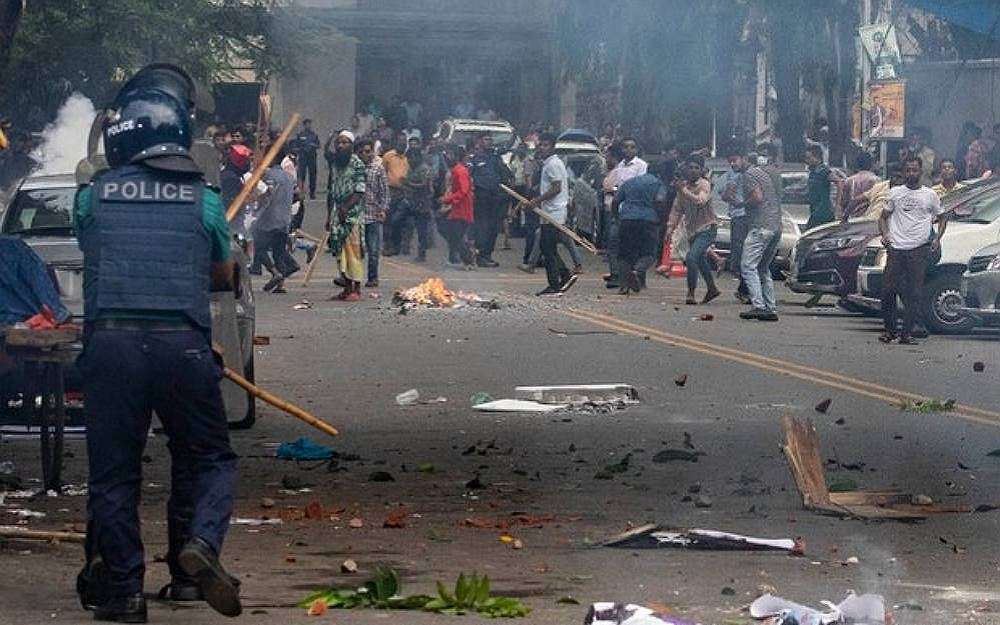
Oct. 28 marked a watershed moment in Bangladesh’s politics, when a BNP rally in Dhaka was disrupted by a pre-emptive police crackdown, foreshadowing a broader clampdown on the opposition.
Internet service was cut, and security forces swooped in, using isolated violence as a pretext. Subsequently, more than 10,000 BNP activists, including leaders, were arrested, and the party office was shut down. This led to widespread general strikes and transport blockades by the BNP and its allies.
When the Election Commission on Nov. 15 announced the election schedule, it did so despite the ongoing strikes and transportation blockades.
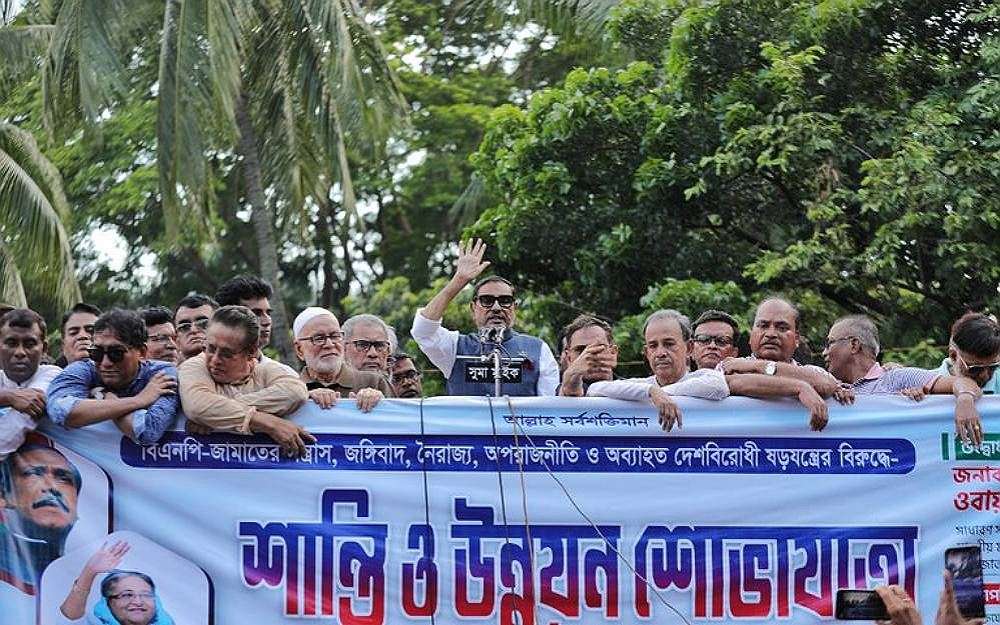
Predictably, 17 of the 44 parties formally registered with the EC – including the BNP – rejected the announcement, and only 15 publicly welcomed it, while 12 parties have yet to make any public statements. Many other political parties or organizations, which are not formally registered but have the ability to mobilize public opinion, are opposed to the schedule.
Their rejections stem from their demands that the incumbent government, led by Prime Minister Hasina, resign to make way for a neutral government to oversee the election process.
The demand isn’t new: the BNP and other parties have had the same demand since the Awami League unilaterally removed the Caretaker Government provision from the constitution in 2011.
However, what’s different today is that the previous two flawed elections – as well as a series of local elections held over the past years – vindicated the BNP’s position. It’s clear that in Bangladesh, a level playing field is non-existent and state machinery acts like an extension of the ruling party.
As such, the demand for a neutral government overseeing the election has become a popular demand. A recent survey by the International Republican Institute found that 69% of Bangladeshi respondents said that the prevalent system would not deliver a fair election.
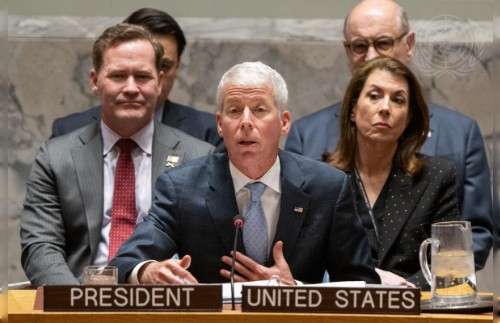
Moreover, this time around, the election is under heavy scrutiny by the international community, particularly the United States, which has repeatedly pressed for a free and fair election for the past two years.
Part of a Great Game?
The United States has long underscored the need for an environment conducive to free, fair and peaceful elections. The repeated assurances by Hasina failed to convince the U.S. and the European Union.
The U.S., as a marker of its support to a free election, announced a visa policy in May, threatening to deny entry to those in Bangladesh who act to undermine democracy. In the past year, there have been intense efforts by the Biden administration to nudge the Bangladesh government towards an inclusive election.
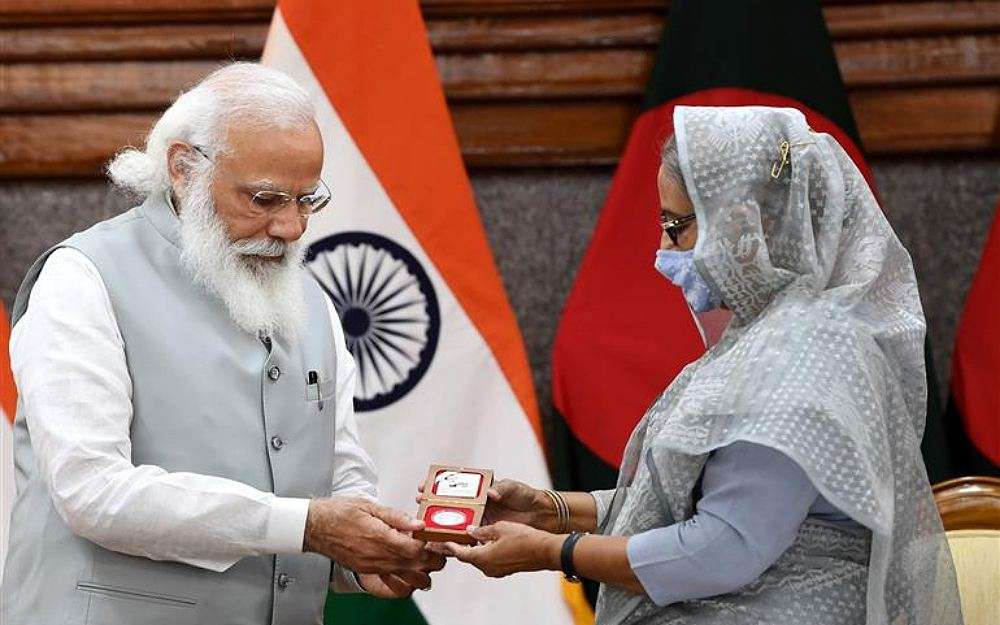
India, considered the linchpin of U.S. policies towards the smaller South Asian countries such as Bangladesh, Nepal, Sri Lanka, and the Maldives, has been a staunch supporter of Hasina since 2009 and has even interjected its position in Bangladesh’s domestic politics. Thus, a disagreement between the U.S. and India emerged.
Meanwhile, China has adopted a more assertive stance across South Asia and has gone to become a close ally of the Hasina administration – a trend that India has not succeeded in containing. As part of a global polarization, Russia is also standing by the Hasina government.
This contestation is a part of the geopolitical developments in the region and increasing competition in the Asia-Pacific region between the U.S. and China.
What’s next?
With BNP’s most senior leaders either arrested or hiding to avoid arrests, U.S. Assistant Secretary Donald Lu on Nov. 13 urged three major parties – the Awami League, the BNP and the Jatiya Party – to hold a dialogue to solve the impasse.
But even before these parties could react to the call, the Election Commission announced the date for elections, essentially shutting down any possibility of a negotiated settlement, which only shows that it’s acting at the government’s behest.
Evidently, the ruling party wants to hold the election by severely weakening the opposition, rendering it unable to participate in the election even if it wanted to, let alone accept its demand for a neutral interim government to shepherd the election.
In the coming weeks, the state apparatuses will be used to ramp up the crackdown on the opposition, which faces the daunting challenge of mobilizing under a climate of repression while also hindered by Washington’s stark warning against violence.
The ruling party appears to bet on the premise that opposition parties, still ununited, will not be able to muster an effective challenge if it repeats a one-sided election. It trusts that a combination of the 2014 and 2018 strategies – keeping the opposition outside the election process but allowing newly minted “King’s Parties” to participate – will allow it to retain power.
But it’s also true that the urge among the public for a free election is greater than at any other time. The international scrutiny is also more heightened now than in 2014 or 2018, stemming from Bangladesh’s increased geopolitical significance, China’s growing presence, and the tenacious American insistence on a fair election.
Now the question is whether the global community will act to prevent the “disaster in the making.”
It’s time the global powers understood that the next election may be Bangladesh’s most consequential one and the last chance to reverse its authoritarian trend.
Ali Riaz is a distinguished professor of political science at Illinois State University and a non-resident senior fellow of the Atlantic Council. The views expressed here are his own and do not reflect the position of Illinois State University, the Atlantic Council, or BenarNews.
Copyright ©2015-2022, BenarNews. Used with the permission of BenarNews.